
What is Dread Forum? For anyone researching hidden networks, finding a reliable, centralized place for discussion is often the biggest hurdle. This usually happens because the dark web lacks traditional search engines and indexed social media, leaving users to navigate fragmented, unverified links. Dread solves this by acting as a structured, anonymous gathering place. In this guide, you will learn exactly how this platform operates, who uses it, and the realistic security measures required to browse it without compromising your identity.
Quick Answer
What is Dread Forum? It is a Reddit-like discussion platform hosted on the Tor network, serving as the primary community hub for the dark web. Users rely on it to read news, review illicit marketplaces, and discuss cybersecurity without exposing their real IP addresses. Accessing it requires the Tor browser and a basic understanding of PGP encryption.
What Is Dread Forum?
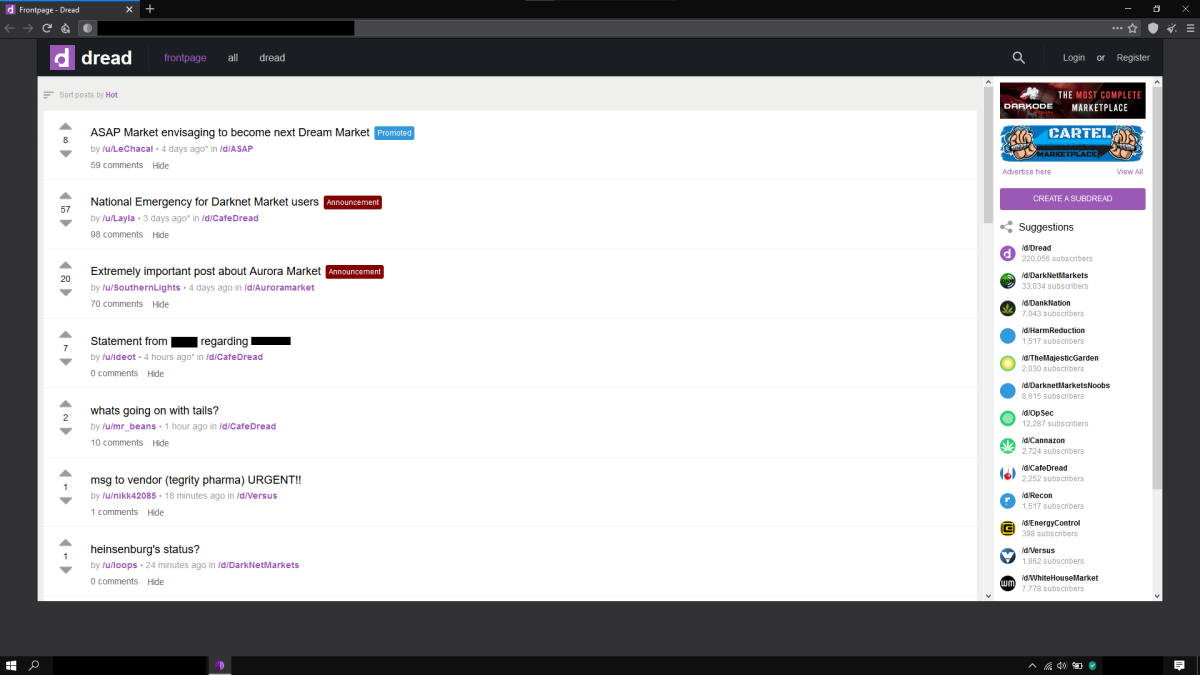
Dread is a hidden service on the Tor network designed to look and function almost exactly like Reddit. It operates as a text-based bulletin board where users can create accounts, post threads, and upvote or downvote content.
It works by utilizing Tor's .onion routing to hide the physical locations of its servers and its users. Unlike clearnet social media, you do not provide an email address or phone number to register. Instead, account creation requires a PGP key, which cryptographically proves you control a specific identity without revealing who you actually are.
People use Dread because it is one of the few places on the dark web with active moderation. It serves as a central ledger for darknet market news. If a major marketplace disappears or a new vendor scam is detected, the first reports almost always appear on Dread.
- What it is: An anonymous, Reddit-style discussion board hosted as a .onion hidden service.
- Why it matters: It acts as the primary intelligence hub for dark web activity, helping users avoid scams and track law enforcement actions.
- Who uses it: Privacy advocates, cybersecurity researchers, journalists, and individuals participating in or tracking darknet markets.
- Strengths: Strong community moderation, PGP-verified identities, and a familiar user interface that lowers the learning curve.
- Limitations: It suffers from frequent downtime due to DDoS attacks, slow loading times inherent to the Tor network, and strict moderation that can sometimes result in arbitrary bans.
- Beginner suitability: Moderate. The interface is easy to understand, but the requirement to generate and use PGP keys just to create an account often confuses first-time users.
History of Dread
Understanding the origins of the platform provides context for its current culture and operational security. Dread was not the first dark web forum, but it filled a massive void left by international law enforcement actions.
Why Dread Was Created
In mid-2017, law enforcement agencies from the US, EU, and Netherlands executed Operation Bayonet, successfully taking down AlphaBay and Hansa—the two largest darknet markets at the time, as documented in official Europol and DOJ reports. Along with the markets, several associated forums vanished. The dark web community was left without a centralized, neutral place to share information or discuss the fallout. A pseudonymous developer known as Hugbunter created Dread to fill this exact gap, launching it in early 2018.
Founder (Hugbunter)
Hugbunter remains the primary administrator and developer of Dread. Unlike many dark web figures who hide behind total silence, Hugbunter has maintained a highly visible, consistent presence on the platform. Threat intelligence reports frequently note his open communication style regarding technical issues, server migrations, and moderation policies. This consistency has built a rare level of trust in a highly paranoid environment.
Community Growth
After a slow start, Dread’s growth accelerated as new markets like Empire and later White House Market emerged. It became the de facto starting point for anyone entering the darknet ecosystem. By 2020, it was firmly established as the largest dark web forum, a title it retains today.
How Dread Works
The platform relies on a combination of familiar social media mechanics and stringent cryptographic security to function.
Dread Architecture
To understand how it stays online (and why it goes offline), it helps to visualize the architecture:
text
[ User Device ]
│
├─> Connects to VPN (Optional but recommended for ISP hiding)
│
└─> Opens Tor Browser
│
├─> Traffic bounces through 3 random Tor Nodes (Entry, Middle, Exit)
│
└─> Connects to Dread Hidden Service (.onion)
│
├─> Server verifies PGP Signature (No passwords stored)
│
└─> Serves Text-Only Content via PHP backend
Key Features
Dread strips away the bloat of modern clearnet websites. There are no images, no videos, and no heavy JavaScript. It is purely text-based, which keeps bandwidth low and loading times manageable on the Tor network. This minimalist approach is a deliberate security and performance choice.
SubDreads Explained
Just as Reddit has subreddits, Dread uses "Subdreads." These are individual boards dedicated to specific topics, ranging from general cryptocurrency discussions to specific darknet marketplaces. Each SubDread has its own moderators who enforce specific rules, allowing the platform to scale across dozens of niches without becoming chaotic.
How Accounts Work & PGP Authentication
You cannot create an account with a username and password. When you register, Dread generates a unique cryptographic challenge. You must sign this challenge using your personal PGP private key. The site then associates your public key with your chosen username.
Because there are no passwords to be stolen in a database breach, accounts are virtually impossible to compromise unless the user's personal computer is infected with malware. If you are unfamiliar with this process, reading a guide on what is PGP will explain the basics of public and private key pairs.
Voting System & Moderation
Dread uses an upvote and downvote system identical to Reddit. High-quality posts or accurate scam reports rise to the top. Hugbunter appoints global moderators, and SubDread owners appoint local moderators. They have the ability to pin posts, remove rule-breaking content, and ban users by blocking their PGP public key.
Why People Use Dread
Dread’s popularity stems from the sheer utility it provides in an otherwise chaotic environment. It offers community-driven scam warnings, allowing users to check a vendor’s reputation before sending cryptocurrency. It serves as a direct communication channel between market administrators and their user base during outages or crises. Furthermore, it hosts high-quality discussions on operational security (OPSEC) and privacy tools that cannot be safely discussed on the clearnet.
Dread Ecosystem Map
Dread does not exist in a vacuum. It is the central hub of a larger dark web ecosystem:
text
[ Dread Forum (The Hub) ]
│
┌─────────────────┼─────────────────┐
│ │ │
[ Darknet Markets ] [ Vendors ] [ Community ]
(Discuss status, (Verify PGP, (Security,
exit scams) reviews) crypto, news)
│ │ │
└─────────────────┼─────────────────┘
│
[ Threat Intelligence ]
(Researchers & journalists monitor
Dread for early warning signs)
Who Uses Dread?
The user base is diverse, though united by an interest in privacy or darknet economies. Cybersecurity researchers and threat intelligence analysts use it to track emerging malware trends and scam campaigns. Journalists use it to source stories about digital illicit economies. Privacy advocates use the technical SubDreads. Finally, the bulk of the daily active users are participants in darknet markets—buyers, vendors, and market administrators using the platform for logistics and reputation management.
Community Rules
To maintain stability and avoid the immediate ire of law enforcement, Dread enforces strict rules. The most critical is the absolute prohibition on "sourcing." You cannot directly buy, sell, or advertise illegal goods on the forum. Doing so results in an immediate, permanent ban. Spamming, doxxing (sharing personal information), and posting malicious links are also strictly forbidden. Vendors are encouraged to verify their identities by signing a PGP message linking their market profile to their Dread profile.
Is Dread Legal?
The legality of browsing Dread exists in a gray area that depends entirely on your jurisdiction and your behavior. Simply reading text on a forum is not illegal in most democratic countries. The Tor browser itself is legal. However, actively participating in discussions that facilitate illegal acts, or using the forum to coordinate criminal activity, can potentially be used against you in an investigation.
Is Dread Safe?
Many users ask, is Dread Forum safe? Safety on Dread is relative. The platform itself does not serve malware or attempt to de-anonymize you. However, the environment surrounding it is hostile.
Common Risks & Scams
Because Dread is highly trusted, scammers actively target its users. The primary risk is user error—accessing the site via a standard browser, or reusing a clearnet username. The most prevalent scam is phishing. Malicious actors create fake onion URLs (like dread.cc or dread.to) that look identical to the real site to steal PGP signatures or cryptocurrency. Fake vendor accounts and fabricated "exit scam" posts used to manipulate market prices are also common.
How to Stay Safe
Never click a Dread link from a standard search engine. Always verify the official .onion link through trusted sources. Using a dark web monitoring tool like DarkStats can help you verify legitimate links and monitor the operational status of hidden services. You can also check the dedicated Dread Forum listing to ensure you have the correct address. Keep your PGP keys secure, use Tails OS if possible, and never admit to committing real-world crimes on the platform.
How to Access Dread
You must download the official Tor browser directly from the Tor Project website. Once installed, you must obtain the correct, current .onion URL for Dread. Never use domains ending in .com, .net, or .onion.ly. These are clearnet proxies designed to steal your data.
For an added layer of protection, many users route their Tor traffic through a VPN first. Understanding the differences between Tor and VPN helps clarify that while Tor handles your anonymity on the network, a VPN hides the fact that you are connecting to the Tor network from your internet service provider.
Tor vs VPN for Accessing Dread
| Feature | Tor Browser Only | VPN + Tor Browser |
|---|---|---|
| ISP Visibility | ISP can see you are using Tor | ISP only sees encrypted VPN traffic |
| Anonymity on Dread | High (Tor routing protects your IP) | High (Tor routing still protects your IP) |
| Entry Node Vulnerability | Exposed to your ISP | Hidden from your ISP |
| Speed | Slower (multiple hops) | Slowest (VPN overhead + Tor hops) |
| Best For | Standard anonymous browsing | Users in restrictive countries or high-threat models |
Why Dread Goes Offline
If you spend any time on the dark web, you will notice Dread is frequently inaccessible. Understanding why is Dread forum down is a common concern for new users. Dread goes offline primarily due to massive Distributed Denial of Service (DDoS) attacks. These attacks are often launched by rival forums, extortionists, or state-sponsored actors attempting to disrupt the community. Because the platform runs on limited infrastructure to maintain anonymity, it struggles to mitigate these floods of traffic.
There are no official "mirrors" of Dread. Any site claiming to be a Dread mirror while the main site is down is a phishing operation.
Dread vs Reddit
The Dread vs Reddit comparison is a frequent topic because Dread was explicitly built to mimic the clearnet giant.
| Feature | Dread | |
|---|---|---|
| Network | Tor (.onion hidden service) | Clearnet (Standard internet) |
| Registration | Requires PGP key pair | Requires email/phone number |
| Data Collection | Zero metadata stored | Tracks IP, browsing habits, sells data |
| Content | Text-only (No images/video) | Multimedia (Images, video, embeds) |
| Moderation | Pseudonymous admin & community | Corporate employees & paid moderators |
| Speed | Slow (due to Tor routing) | Fast (global CDNs) |
Dread vs XSS
XSS (Darknet Trust Forum) is Dread’s primary historical competitor. While both serve as dark web discussion boards, they have different cultures and technical foundations.
| Feature | Dread | XSS (Darknet Trust Forum) |
|---|---|---|
| Interface | Modern Reddit-clone layout | Traditional, early-2000s PHP forum |
| Primary Focus | Darknet markets, vendor verification | Hacking, cybersecurity, general discussion |
| Account Security | Strict PGP authentication | Username/Password (with optional 2FA) |
| Moderation Style | Strict "no sourcing" enforcement | Slightly more relaxed on political discourse |
| User Base | Larger, more market-focused | Smaller, more technically oriented |
Dread Timeline
text
2017 │ Operation Bayonet takes down AlphaBay/Hansa. Dark web loses its hub.
│
2018 │ Hugbunter launches Dread in February to fill the information void.
│
2019 │ Platform gains critical mass as Empire Market rises to dominance.
│ Vendor PGP verification becomes the community standard.
│
2020 │ Dread becomes the undisputed central hub. Survives early DDoS campaigns.
│
2021 │ White House Market closure drives massive traffic spikes to Dread.
│
2022 │ Dread suffers a prolonged, months-long outage due to severe DDoS
│ attacks and infrastructure failures. Rumors of an exit scam circulate.
│
2023 │ Hugbunter successfully migrates Dread to new, resilient infrastructure.
│
2026 │ Dread remains operational. Intermittent downtime is a fact of life,
│ but it retains its title as the largest dark web forum.
Security Best Practices
When using Dread, your security relies entirely on your local setup. Always use the most recent version of the Tor browser set to "Safest" to disable JavaScript.
Understanding the tools you use is non-negotiable. Familiarizing yourself with the differences in encryption software, such as reading about PGP vs GPG, ensures you are using the most secure standards for your account management. Furthermore, keeping your activities contextually separated is vital. Understanding the difference between the deep web and dark web helps you compartmentalize your threat models. Never download files linked on Dread, as they are almost always malware.
What Security Researchers Can Learn from Dread
From a threat intelligence perspective, Dread is an invaluable open-source intelligence (OSINT) tool. Security professionals monitor specific SubDreads to track the emergence of new ransomware variants before they hit the clearnet. By observing vendor disputes and scam accusations, researchers can map out the infrastructure of cybercriminal groups. Furthermore, studying how users attempt to bypass OPSEC on Dread helps defenders understand the current limitations of anonymization technologies.
Key Takeaways
- Main Takeaway: Dread is the central nervous system of the dark web, functioning as an anonymous, Reddit-style hub for news, reviews, and privacy discussions.
- Security Mechanism: It relies entirely on PGP cryptography for account creation, eliminating the risk of password database breaches.
- Primary Threat: The biggest danger to users is not the platform itself, but sophisticated phishing links designed to steal identities or funds.
- Legal Reality: Browsing Dread via Tor is legal in most countries, but engaging in illicit discussions can attract law enforcement scrutiny.
- Operational Reality: Frequent downtime is a permanent feature of the site due to constant DDoS attacks, not a sign that the platform has been seized.
Statistics
While exact metrics are hidden to protect operational security, threat intelligence estimates provide a picture of its scale. Dread has been operational for over seven years. It is estimated to have hundreds of thousands of registered accounts, though daily active users likely number in the low thousands. The platform hosts dozens of active SubDreads, and during major dark web events (like a market collapse), post volume can spike by thousands of percent in a matter of hours.
Myths
- Dread is a marketplace: False. You cannot buy or sell anything on Dread. It is strictly a discussion board.
- Dread is illegal to visit: False in most jurisdictions. Browsing the site via Tor is legal; facilitating crimes is not.
- The admin will steal your funds: Highly unlikely. Hugbunter has never operated a market or an escrow service. The platform does not handle user funds.
- Tor is completely untraceable: False. Tor provides strong anonymity, but user error, browser exploits, or timing attacks can compromise it.
Glossary
- Onion: A domain suffix used exclusively for hidden services accessible only via the Tor network.
- Tor: A decentralized network that routes internet traffic through multiple relays to hide a user's location.
- OPSEC (Operational Security): The process of identifying, controlling, and protecting critical information from adversaries.
- PGP (Pretty Good Privacy): An encryption program used for secure communication and verifying digital identities.
- Vendor: A seller on a darknet market.
- Escrow: A financial arrangement where a third party holds funds until the buyer confirms receipt of goods.
- Exit Scam: When a market or vendor deliberately shuts down and steals the funds held in escrow or user wallets.
- Mirror: A duplicate website set up to serve as a backup if the primary site goes offline. (Note: Dread does not use mirrors).
- Hidden Service: A website hosted on the Tor network, accessible only via its .onion address.
FAQs
Why is Dread always down? Dread frequently goes offline because it is targeted by massive DDoS attacks. These attacks overwhelm the server's resources, making the site inaccessible until the traffic subsides or the admin mitigates the attack. You can read our guide on why is Dread forum down for a full breakdown.
Can I access Dread without the Tor browser? No. Dread is a .onion hidden service, which is a protocol uniquely handled by the Tor network. Standard browsers like Chrome or Safari cannot resolve .onion addresses.
Do I need to use my real name to join Dread? No, and you should never use any identifiable information. Registration requires a PGP key pair, allowing you to create a completely anonymous pseudonym.
What happens if I lose my PGP key? If you lose your PGP private key, you lose access to your Dread account permanently. There is no "forgot password" feature because the platform does not use passwords.
Does Dread have an official clearnet website? No. Any website claiming to be the official clearnet version of Dread (such as domains ending in .com or .org) is a phishing site designed to steal your data or monitor your traffic. Always verify the link through trusted sources, such as finding the official Dread onion link via a secure directory.
Can Dread be accessed on mobile? Yes, but it is highly discouraged. You must use the official Tor Project app for Android (Orbot + Orfox/Tor Browser). Using third-party dark web browsers on iOS or Android often leads to compromised security.
Why does Dread require PGP? Dread requires PGP to eliminate the need for passwords. If the server were hacked, no passwords could be stolen. PGP also allows vendors to cryptographically prove their identity across different platforms.
Can law enforcement read Dread? Yes. Dread is a public forum. While they cannot see the IP addresses of the posters without exploiting a Tor vulnerability, they can absolutely read every public post, thread, and comment for intelligence gathering.
What is a SubDread? A SubDread is an individual community board on Dread, exactly like a subreddit on Reddit. They are dedicated to specific topics like individual markets, cryptocurrency, or security.
What happens if Dread disappears? If Dread disappears permanently, the dark web would lose its primary centralized hub. Users would likely fragment back to smaller, less moderated forums, which would likely cause a spike in scams due to the lack of verified vendor reputations.
How can I recognize phishing onion links? Understanding what a Dread onion link is helps: Legitimate Dread links are long, random strings of letters and numbers ending in .onion. Phishing links often use short, recognizable names (like dread-market.onion) or use clearnet domains. Always verify the link through trusted sources.
Is it safe to download files from Dread? No. You should never download files from Dread. Even if posted by a trusted user, their account could be compromised. Files on dark web forums are frequently weaponized with malware designed to deanonymize Tor users.
Related Guides
- What Is the Dark Web? Deep Web vs Dark Web Explained
- How to Set Up and Use PGP Encryption for Beginners
- Tor Browser Safety and Legality Guide
- How to Monitor Dark Web Exposure for Your Data
Conclusion
Navigating hidden networks requires reliable sources of information to avoid the constant threat of scams and phishing. Dread Forum provides this centralized, community-driven environment by combining the familiar format of traditional social media with the strict anonymity of the Tor network. While its slow speeds and persistent downtime pose a minor frustration, it remains the most effective tool for tracking dark web activity. Approaching the platform with strict operational security and a healthy skepticism of unverified links ensures you can gather information without exposing yourself to unnecessary risk.