


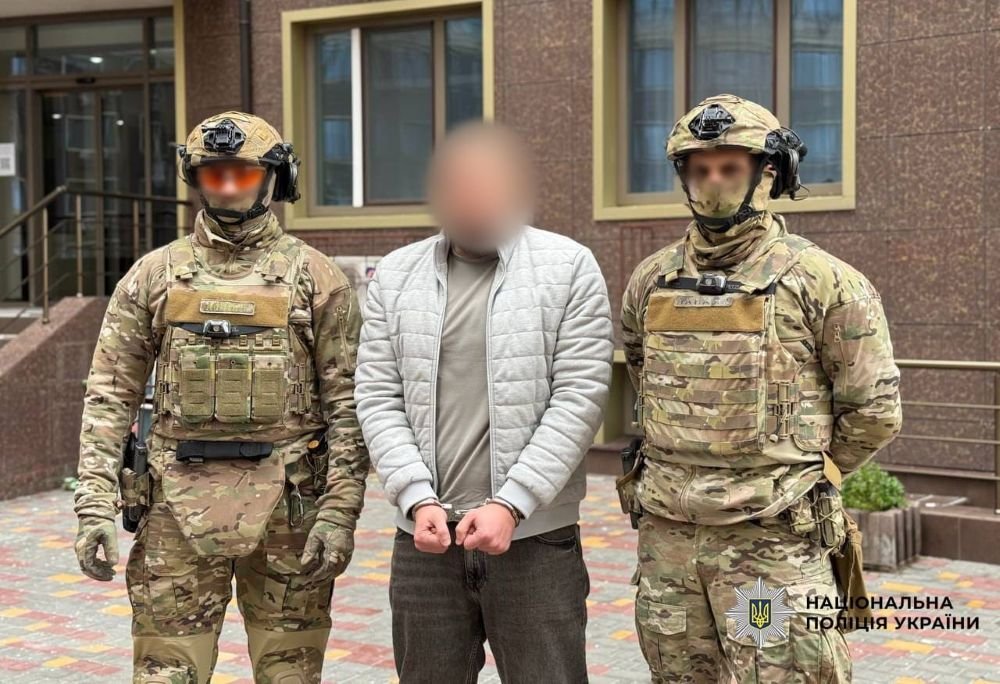
In a significant development in the global fight against cybercrime, the FBI and Ukrainian police have arrested four suspected members of an international ransomware network accused of extorting more than $40.5 million from at least 28 companies worldwide.
The arrests followed a two-year investigation involving Ukrainian law enforcement agencies and the United States Federal Bureau of Investigation (FBI). Authorities say the suspects were allegedly part of a sophisticated cybercriminal organization that targeted businesses across several industries, using social engineering, stolen credentials and ransomware to gain access to corporate networks.
What makes this case particularly concerning is the group's reported use of artificial intelligence (AI)-generated voice messages to impersonate IT support employees and trick company workers into providing access to sensitive systems.
The operation highlights how ransomware criminals are increasingly combining traditional hacking techniques with AI-powered deception to target organizations and demand millions of dollars in cryptocurrency.
Four Suspects Arrested in Major International Cybercrime Operation
According to Ukraine's National Police, investigators identified at least 27 individuals connected to the suspected ransomware organization, with members reportedly based in Ukraine, Kazakhstan, Russia and other countries.
Authorities also uncovered links to a wider international criminal network involving more than 60 people operating across eight jurisdictions.
The investigation reportedly established that at least 28 companies had transferred more than $40.5 million in ransom payments to the cybercriminals. Officials say this figure represents money already paid by victims, while the full financial damage is still being assessed.
The four suspected key members were detained during a coordinated international law enforcement operation involving Ukrainian authorities and the FBI.
As part of the investigation, officers conducted 66 simultaneous searches across Kyiv and 11 other regions of Ukraine.
During the raids, investigators seized computers, mobile phones, bank cards, nearly $370,000 in cash and approximately €20,000.
All four suspects have been formally notified of suspicion and remain in custody. They face charges relating to participation in a criminal organization and unauthorized interference with information systems. If convicted, they could face prison sentences of up to 15 years under Ukrainian law.
Authorities have not disclosed the identities of the four suspects, and the investigation remains ongoing.
How the Ransomware Group Targeted Businesses
Investigators say the cybercriminal organization followed a carefully planned approach before launching attacks.
Rather than randomly targeting companies, members allegedly researched potential victims in advance. This included examining their financial position, business assets, employees and weaknesses in their IT infrastructure.
The group reportedly focused on organizations operating in several important industries, including:
- Oil and gas: Companies involved in energy production and services.
- Pharmaceuticals: Businesses handling sensitive research and commercial information.
- Manufacturing: Industrial organizations dependent on connected computer systems.
- Logistics: Companies responsible for transportation and supply chain operations.
- Financial services: Institutions managing valuable financial information.
- Critical infrastructure: Organizations providing essential services.
This targeted approach allowed the attackers to identify businesses that could face serious operational and financial consequences if their computer systems were compromised.
Once access was obtained, the criminals allegedly stole confidential information, encrypted company files and disrupted normal business operations. They then demanded cryptocurrency payments in exchange for restoring access to affected systems.
In many cases, victims also faced threats that their stolen information would be published publicly if they refused to pay.
This combination of data theft and file encryption is commonly known as double extortion ransomware.
AI-Generated Voice Messages Used to Impersonate IT Support
One of the most notable findings in the investigation involves the group's reported use of artificial intelligence.
According to Ukrainian National Police officials, the attackers developed a platform featuring AI-generated voice messages to automate fraudulent telephone calls.
During these calls, criminals allegedly pretended to be members of a company's internal IT support department.
Employees were contacted under the pretext of receiving technical assistance. The attackers then attempted to persuade them to reveal login credentials or install remote-access software on their computers.
These methods provided the criminals with a way to enter corporate networks without necessarily exploiting a complicated software vulnerability.
Investigators also described an incident in which one attacker kept an employee occupied on the telephone while another criminal attempted to access the company's internal systems.
The call reportedly ended only after the attackers confirmed that the intrusion had been successful.
This technique demonstrates how social engineering and AI-powered voice impersonation can become powerful tools in modern cybercrime.
For businesses, the incident is a reminder that cybersecurity threats do not always begin with suspicious emails or malicious software downloads. Sometimes, they begin with an ordinary-looking telephone call.
One American Company Paid $5 Million After a Ransomware Attack
Investigators have also revealed details of an attack involving an American company that reportedly lost approximately 1.4 terabytes of corporate data to the ransomware group.
According to information shared by Ukraine's acting National Police chief, Maksym Tsutskiridze, the attackers initially demanded $10 million.
Following negotiations, the company ultimately paid approximately $5 million in ransom.
The attackers allegedly expanded their operation to other businesses belonging to the same corporate group.
Ukrainian court records reviewed by cybersecurity news organizations have also identified several American businesses allegedly targeted by the network, including:
- Warren Oil Company
- Maxxis International-USA
- Newpark Resources
- Quantum Health
These cases illustrate the potential financial consequences of ransomware attacks, particularly when criminals gain access to sensitive corporate information and threaten to release it.
The identification of these companies comes from investigative and court-record reporting. It should not be interpreted as evidence that every company was targeted in exactly the same way or that all reported details have been independently confirmed by the affected businesses.
Possible Connections to the Conti Ransomware Gang
Another important aspect of the investigation is the suspected network's connection to former members of Conti, one of the most notorious ransomware operations in recent cybercrime history.
According to Ukrainian authorities, former Conti members were among the individuals connected to the wider criminal structure.
The Conti ransomware operation became widely known for targeting businesses, government organizations, healthcare providers and other institutions.
Although Conti effectively shut down under its original identity in 2022, its former members did not necessarily disappear from the cybercrime landscape. Some reportedly moved into other ransomware operations and criminal networks.
Investigators have not established that the four arrested suspects personally belonged to Conti. They have also not publicly confirmed the exact ransomware operation responsible for every attack attributed to the network.
Nevertheless, the reported connections demonstrate how cybercriminal expertise, infrastructure and relationships can continue to influence ransomware activity even after a major criminal group disappears.
What the FBI and Ukrainian Police Seized During the Raids
The coordinated law enforcement operation involved dozens of searches across Ukraine.
Investigators collected a range of potential evidence that could help establish how the organization operated and identify additional individuals involved in its activities.
Items seized during the operation included:
- Computer equipment and electronic devices.
- Mobile phones.
- Bank cards.
- Nearly $370,000 in cash.
- Approximately €20,000 in cash.
Digital devices and financial records could prove particularly important as investigators examine communications, cryptocurrency transactions, remote-access tools and other evidence connected to the alleged attacks.
Authorities say they are continuing to investigate the wider network and identify other suspected participants.
Why This Ransomware Investigation Matters for Businesses
The arrests are significant not only because of the amount of money involved but also because of the methods reportedly used by the attackers.
Ransomware attacks are becoming increasingly sophisticated, and organizations can no longer rely exclusively on traditional antivirus software and firewalls to protect their systems.
The reported use of AI-generated voice messages highlights the growing importance of employee awareness and identity verification.
A criminal pretending to be an IT support employee may sound convincing, especially when using automated voice technology and information gathered through online research.
Businesses should consider strengthening their cybersecurity practices in several areas:
1. Verify IT support requests
Employees should never provide passwords, authentication codes or remote-access permissions simply because someone claims to be an IT administrator. Unexpected support requests should be verified through an official internal communication channel.
2. Strengthen multi-factor authentication
Organizations should implement phishing-resistant multi-factor authentication wherever possible, particularly for remote access, administrator accounts and critical business systems.
3. Restrict remote-access software
Applications such as TeamViewer and AnyDesk can serve legitimate business purposes, but unrestricted access can create serious security risks. Companies should monitor and control their use.
4. Train employees against social engineering
Regular cybersecurity training should cover fraudulent telephone calls, impersonation attempts, phishing websites and AI-generated voice scams.
5. Maintain secure offline backups
Reliable backups can help businesses restore operations following a ransomware incident. Backups should be protected from unauthorized access and regularly tested.
6. Monitor unusual network activity
Organizations should continuously monitor authentication attempts, suspicious remote connections, unusual data transfers and unexpected administrative activity.
These measures cannot eliminate every cyber threat, but they can reduce the likelihood of successful attacks and limit the damage when an intrusion occurs.
Four Arrests Mark an Important Step in the Fight Against Ransomware
The joint FBI and Ukrainian police investigation exposes the scale and complexity of modern international ransomware operations.
With more than $40.5 million in reported ransom payments, at least 28 identified corporate victims and a wider network allegedly involving more than 60 individuals, the case demonstrates how financially damaging organized cybercrime can become.
The reported use of AI-generated voice messages also raises important questions about how businesses should prepare for increasingly convincing impersonation attacks.
For now, the four suspects remain in custody, while investigators continue working to identify additional members of the alleged network and determine the full extent of its activities.
For companies around the world, the message is clear: cybersecurity is no longer just about protecting computers. It is also about protecting employees, identities, business information and the trust that keeps organizations operating.